
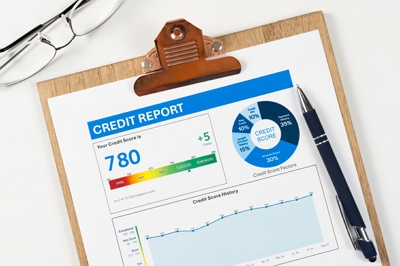
Understanding Credit History Beyond the Credit Score
Quick Summary
Knowing how to read a tenant credit report can provide valuable insight into an applicant’s financial behavior, but landlords should look beyond the credit score alone. Payment history, collections, debt obligations, and overall credit patterns often reveal more than a single number.
- Look beyond the credit score
- Review payment history carefully
- Identify collections and charge-offs
- Evaluate debt obligations
- Consider the applicant’s complete financial picture
A tenant credit report is one of the most commonly used tools in the tenant screening process.
However, many landlords make the mistake of focusing exclusively on the applicant’s credit score while overlooking the details that often provide a more complete picture.
A tenant credit report can reveal payment habits, debt obligations, collection activity, and financial patterns that may help landlords make more informed approval decisions.
Understanding how to read a tenant credit report can help you evaluate risk more effectively and avoid relying on a single number.
Why Credit Reports Matter
Credit reports and consumer reports provide great insight into how an applicant has managed financial obligations over time.
While past financial behavior does not guarantee future performance, it can provide useful information when combined with income verification, rental history, and other screening factors.
A complete tenant screening process evaluates multiple areas rather than relying solely on credit information.
Start With the Credit Score
The credit score is often the first thing landlords notice.
While scores vary among credit reporting models, higher scores generally indicate a stronger history of managing credit obligations.
However, credit scores should be viewed as a starting point rather than a final decision-making tool.
Two applicants with identical credit scores may have very different credit histories.
Review Payment History
Payment history is often one of the most important sections of a credit report.
Look for:
- Late payments
- Repeated missed payments
- Recent delinquent accounts
- Patterns of financial difficulty
Occasional mistakes happen, but repeated payment problems may warrant additional review.
Examine Collection Accounts
Collections may indicate that debts were not paid as agreed.
When reviewing collections, consider:
- The amount involved
- The age of the collection
- Whether the debt has been resolved
- Whether multiple collections exist
Older isolated collections may be less concerning than a pattern of ongoing collection activity.
Understand Charge-Offs
A charge-off occurs when a creditor considers a debt unlikely to be collected.
Charge-offs can be a significant indicator of past financial problems and should be evaluated carefully.
As with collections, context matters.
A single charge-off from many years ago may be less concerning than multiple recent charge-offs.
Evaluate Debt Obligations
Credit reports often show outstanding debt balances.
Consider:
- Credit card balances
- Auto loans
- Personal loans
- Student loans
The goal is not simply to identify debt, but to understand whether the applicant appears capable of meeting both existing obligations and future rent payments, and be mindful of the 3X Rent Rule.
Watch for Recent Financial Stress
Recent financial difficulties may deserve additional attention.
Examples include:
- Multiple late payments
- New collection accounts
- Increasing debt levels
- Recent charge-offs
Patterns are often more important than isolated incidents.
Consider Bankruptcy Carefully
Bankruptcy does not automatically disqualify an applicant.
Many people experience financial hardships due to:
- Medical expenses
- Divorce
- Job loss
- Economic downturns
If bankruptcy appears on a report, consider the circumstances, timing, and overall financial recovery since the filing.
Look for Credit Patterns
One of the most valuable aspects of a credit report is the ability to identify trends.
Ask yourself:
- Is the applicant’s financial situation improving?
- Are payment habits consistent?
- Are problems isolated or recurring?
Patterns often provide more insight than individual entries.
Credit Reports Are Only One Part of Screening
Credit reports can be valuable, but they should never be the sole basis for a decision.
A complete tenant screening checklist should also include:
- Income verification
- Employment verification
- Rental history verification
- Reference checks
- Applicant behavior assessment
The strongest approval decisions evaluate the entire applicant profile.
The Bottom Line
A tenant credit report can provide important information about an applicant’s financial habits and obligations.
However, landlords should look beyond the credit score and evaluate payment history, collections, debt levels, and overall financial patterns to identify tenant screening red flags or other concerns..
When combined with income verification and rental history, credit reports can help support more informed tenant approval decisions.
Frequently Asked Questions About Tenant Credit Reports
What is the most important part of a tenant credit report?
Many landlords consider rental history verification to be one of the most important sections because it provides insight into how consistently an applicant has met financial obligations.
Is a credit score enough to approve a tenant?
No.
Credit scores should be considered alongside income verification, rental history, employment stability, and other screening factors.
What credit score do landlords look for?
Requirements vary by landlord and property. Many landlords establish minimum screening standards, but approval decisions should consider the entire applicant profile rather than a single score.
Are collections always a reason to deny an applicant?
Not necessarily.
The age, amount, frequency, and circumstances surrounding collection accounts should all be considered.
Does bankruptcy automatically disqualify a tenant?
No.
Many applicants who have experienced bankruptcy have since rebuilt their financial situation. Context and current financial stability are important considerations.
Why should landlords review payment history?
Payment history often provides a better picture of financial behavior than a credit score alone. Consistent on-time payments may indicate responsible financial management.
Should landlords rely on credit reports alone?
No.
Credit reports should be one part of a complete tenant screening process that also includes income verification, rental history verification, and other screening factors.
Ready for the Complete Screening System?
The Tenant Approval System includes:
✔ Complete Screening Framework
✔ Tenant Scoring Calculator
✔ Tenant Screening Checklist
✔ Legal Considerations Guide
✔ Structured Decision-Making Process
👉 Get the Complete Tenant Approval System