

How Rental History Verification Can Help
Landlords Make Better Approval Decisions
Quick Summary
Rental history is often one of the strongest predictors of future tenant behavior. Speaking with previous landlords can help verify payment history, lease compliance, property care, and overall reliability before approving an applicant.
- Verify rental history directly with previous landlords
- Confirm rent payment habits
- Identify lease violations or complaints
- Evaluate overall tenant reliability
- Watch for fake landlord references
Questions to Ask Previous Landlords Before Approving a Tenant
Many landlords focus heavily on income verification, the 3x Rent Rule and credit reports when screening applicants.
While those factors are important, rental history often provides insights that financial documents cannot.
A previous landlord can help you understand how an applicant behaved as a tenant, whether rent was paid on time, how the property was maintained, and whether there were any lease violations.
This information can help landlords make more informed tenant approval decisions and avoid costly mistakes.
Why Rental History Matters
Past behavior is often one of the best predictors of future behavior.
A tenant who consistently paid rent on time, followed lease terms, and maintained a property responsibly is more likely to do the same in the future.
Rental history can reveal:
- Payment habits
- Property care
- Lease compliance
- Communication style
- Reliability
For this reason, many experienced landlords consider rental history verification an essential part of the tenant screening process.
Why Current Landlords May Not Tell the Whole Story
Many landlords automatically contact the applicant’s current landlord.
However, some landlords may be motivated to provide a positive reference simply because they want a difficult tenant to move out.
For this reason, previous landlords can sometimes provide more candid and useful information.
Whenever possible, consider speaking with both the current landlord and at least one previous landlord.
Key Questions to Ask Previous Landlords
Did the tenant pay rent on time?
This is one of the most important questions to ask previous landlords, bar none.
Occasional late payments may not be a major concern, but consistent payment problems should be carefully evaluated.
Were there any lease violations?
Ask whether the tenant violated any lease terms, including:
- Unauthorized occupants
- Unauthorized pets
- Excessive noise complaints
- Property misuse
Lease compliance can provide valuable insight into how the applicant may behave in the future.
Did the tenant provide proper notice before moving?
Responsible tenants typically follow lease requirements when ending a tenancy.
Failure to provide notice may indicate a pattern of poor communication or disregard for lease obligations.
Were there complaints from neighbors?
Neighbor complaints may reveal issues that are not reflected in credit reports or income documentation, and should be one of the questions to ask previous landlords.
Examples include:
- Excessive noise
- Disturbances
- Parking disputes
- Property misuse
Did the tenant maintain the property?
Ask whether the property was returned in good condition.
Questions to ask previous landlords may include:
- Was the unit clean?
- Was there excessive damage?
- Were maintenance issues reported appropriately?
Property care can be an important indicator of tenant responsibility.
Were there any issues involving pets?
If the applicant has pets, ask whether previous pet-related issues occurred.
Examples may include:
- Property damage
- Noise complaints
- Lease violations
Would you rent to this tenant again?
Many landlords consider this the single most important question on their tenant screening checklist.
A simple “yes” or “no” can often reveal more than a lengthy conversation.
If the answer is no, politely ask for additional details.
How to Verify You’re Speaking With a Real Landlord
Unfortunately, some applicants provide references from friends or family members posing as landlords.
Before relying on a reference:
- Verify property ownership through public records when possible
- Compare contact information with publicly available information
- Confirm the reference is associated with the rental property
Verification helps ensure the information you receive is accurate.
Common Rental History Red Flags
Be alert for:
Refusal to Provide Previous Landlord Information
Applicants who cannot or will not provide rental references may require additional scrutiny.
Frequent Moves
Multiple moves within a short period may indicate instability or unresolved rental issues.
Inconsistent Information
Differences between the rental application and landlord references should be investigated further.
Negative References
Consistent reports of late payments, property damage, or lease violations may indicate elevated risk.
Rental History Is Only One Part of Tenant Screening
Rental history is important, but it should not be evaluated in isolation.
A complete tenant screening process may also include:
- Income verification
- Employment verification
- Credit review
- Reference checks
- Applicant behavior assessment
The strongest approval decisions consider the applicant’s overall profile rather than focusing on a single factor.
The Bottom Line
Previous landlords can provide valuable information that income verification and credit reports cannot.
By knowing the right questions to ask previous landlords and verifying references carefully, landlords can gain a better understanding of an applicant’s past rental behavior and make more informed approval decisions.
Rental history verification is one of the most valuable tools available during the tenant screening process.
Frequently Asked Questions About Rental History Verification:
Why should landlords contact previous landlords?
Previous landlords can provide information about payment history, lease compliance, property care, and overall tenant reliability that may not be reflected in financial documents.
What is the most important question to ask previous landlords?
Many landlords consider “Would you rent to this tenant again?” to be the most important question because it often summarizes the landlord’s overall experience with the tenant.
Should landlords contact the current landlord or previous landlord?
Ideally, both. Current landlords may not always provide complete information, while previous landlords may be more willing to discuss the tenant’s rental history openly.
How can landlords verify a landlord reference?
Landlords can verify ownership through public property records, tax records, or other publicly available information to confirm they are speaking with the actual property owner or manager.
What if an applicant has no rental history?
Applicants with no rental history may require additional evaluation through income verification, employment verification, references, or other screening factors.
Can a good credit score outweigh a bad landlord reference?
Not necessarily. Credit history and rental history measure different aspects of risk. Many landlords consider rental history one of the strongest predictors of future tenant behavior.
Should landlords deny an applicant based on one negative reference?
Landlords should evaluate the entire applicant profile rather than relying on a single factor. Additional verification may be appropriate when conflicting information exists.
Ready for the Complete Screening System?
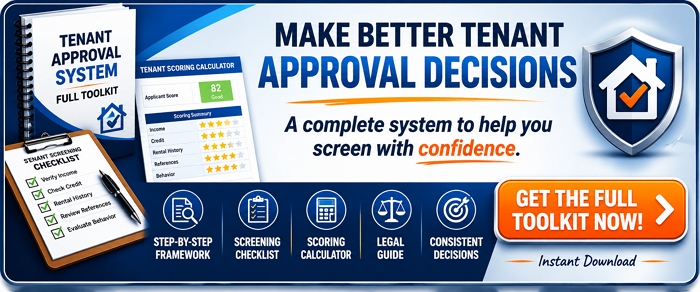
The Tenant Approval System includes:
✔ Complete Screening Framework
✔ Tenant Scoring Calculator
✔ Tenant Screening Checklist
✔ Legal Considerations Guide
✔ Structured Decision-Making Process
👉 Get the Complete Tenant Approval System